
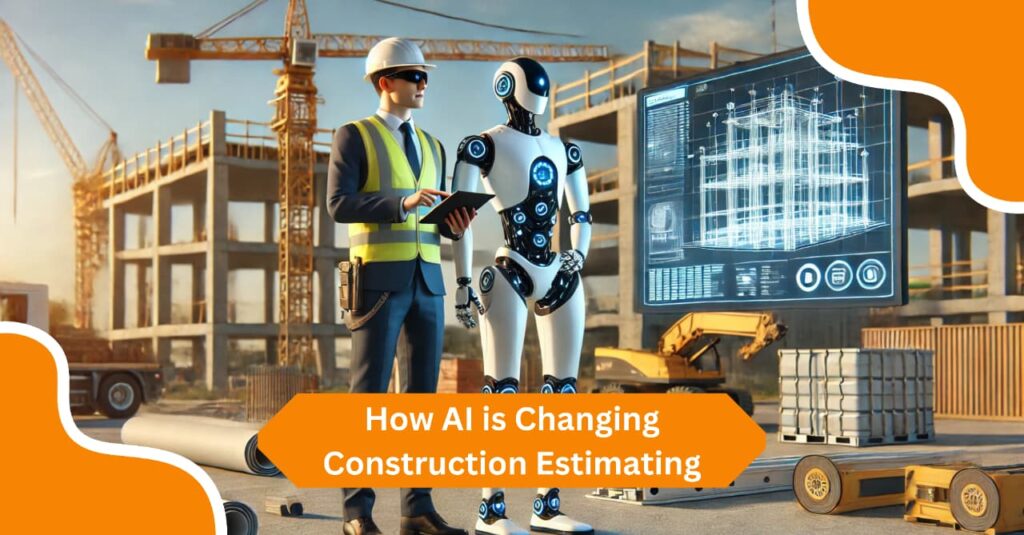
A construction site demands constant multitasking, while crews work under the sun, estimators spend hours buried in plans and numbers. The contractors who are guessing material counts or lost a bid by just little mistakes, know how the effort and stress of manual estimating. It’s slow, tiring, and risky for profit. But in this era of technology, artificial intelligence or AI, is stepping as a reliable partner that turns those headaches into smooth winning projects. Therefore, we are discussing tools that scan drawings in seconds, spot patterns, and process data to deliver estimates that are on spot. This isn’t some far-off dream. It’s happening now, and it’s reshaping how contractors like you win more jobs with less stress.
The Basics of Construction Estimating: Why It Matters
Before discussing tech needs in construction, let’s see what estimating exactly involves. Construction estimating is about estimating the cost breakdown for a project before the construction starts. This involves counting materials like lumber for framing, shingles for roofing, labor hours for the crew, equipment rentals, and even overheads like permits and insurance. When you get it right, your bid lands the contract with great profits. If you get it wrong, you are simply losing projects or killing profits.
For contractors needing affordable roofing estimates or precise bidding on commercial projects, using the old, trivial ways by using rulers, calculators, and endless spreadsheets. This usually took long hours and several days. Just one wrong measurement or count on a takeoff, and your quote will fall. Surveys showed that up to 30% of project budget overruns are because of guessed and unstable estimates. This keeps small teams up at night to find solutions to make a profit. That’s where AI stands with you, it is not to replace your know-how, but to handle the massive work. So, you can focus on other things that are building relationships and delivering quality.

How AI is Transforming the Estimating Process
You are wondering how exactly AI is performing the construction estimating? It is just like giving your brain a turbo boost. Traditional estimating depends on human senses and their experience, which is a great approach, but it leads to fatigue. AI is powered by machine learning, and it learns from thousands of past projects to predict and automate. It’s like having a team of experts who are never tired, assessing every detail in blueprints for better bids every time.
AI’s Role in Automated Quantity Takeoffs
Takeoffs, the step where you measure everything from square footage of walls to linear feet of piping, used to be the biggest time sink. You’d trace lines on paper or click through software, hoping for no oversights. AI takeoff software uses computer vision to “read” digital plans like PDFs or CAD files. In seconds, they count rebar, calculate concrete volumes, or even estimate window placements for a full facade.
For instance, imagine bidding on a mid-size office remodel. AI can quickly scan the drawings, highlight the changes from the original design, and prepare a takeoff report with 95% accuracy in no time. This is far better than manual methods, which are around 80%. This digital estimating automation gives you the freedom from hours of hard work and lets you do site visits, like soil conditions or local codes. Contractors handling affordable roofing estimates for residential jobs reported cutting takeoff time from four hours to under 30 minutes.

Pattern Recognition: Spotting What the Eye Misses
Here’s where it gets clever: the pattern recognition. Machine learning construction estimating compares historical data to find hidden trends. For example, you’ve done dozens of warehouse builds and AI notices that electrical runs average 15% more in rainy climates or that steel prices rise to 10% mid-year based on global supply shifts. It doesn’t just count. It anticipates. A team in Texas working on flood-prone sites uses AI tools to analyze past bids and alert to a 12% increase in drainage needs, saving them from underbidding by thousands. No more gut feelings. It’s data-driven insight that builds trust with clients who want predictable costs.
Data Analytics: The Backbone of Smarter Decisions
At the heart of it all is data analytics. AI cost estimation tools pull from vast databases of material prices, labor rates, and project outcomes. Using algorithms like neural networks, they forecast total costs with variables like inflation or supply chain hiccups thrown in. For a bridge project, it might predict asphalt needs based on traffic volume patterns from similar jobs.
This isn’t guesswork. It’s precision. A study of over 500 projects found AI analytics reduced variance in estimates by 25%, meaning fewer surprises down the line. For busy contractors juggling multiple bids, this means more time chasing leads instead of chasing numbers.
The Big Wins: Accuracy Gains That Pay Off
AI isn’t just flashy new tech sitting on a shelf. It’s putting money back in pockets and sleep back in nights. Here’s the stuff that actually shows up on the bottom line:
- Accuracy that stops budget overruns: Old-school takeoffs miss stuff, or double-count errors usually run 10-20%. That’s real dollars gone. AI gets it down under 5% by double-checking everything against thousands of past jobs with accuracy.
- Speed that wins jobs: A full bid that used to take four or five days? Most guys are turning it around in less than 24 hours now. When the owner says, “I need numbers by Friday,” you’re the one who says, “already in your inbox,” while everyone else is still measuring windows.
- Less waste, happier clients: The software trims material lists to the exact amount you need, no more ordering 10% extra “just in case.” Clients love it because their job looks greener, and you love it because the savings go straight to your margin.
- Catches problems before they happen: The tool looks at your old jobs and warns you: “You always run short on crew in July” or “Material prices spike every storm season.” One contractor got that heads-up, added a small buffer, and saved $62,000 when prices jumped two months later.
- Higher win rates: Contractors who’ve been running these tools for a year are seeing their close rate jump 15–25%. Faster bids and tighter numbers.
Limitations: Keeping It Real in a Perfect World
Look, nobody’s saying this stuff is perfect. Here’s the honest downside every contractor runs into sooner or later:
- Garbage in, garbage out: If your old job files are a mess or you’ve never tracked costs properly, the software will happily learn your bad habits and spit out nonsense. Clean data is everything.
- High Cost: Good tools and a little training can easily cost five grand for a small crew, twenty or more if you want the fancy setup. That stings when you’re already tight.
- Hooking it up to your old junk: Trying to make it talk to that 15-year-old estimating program you’ve been using since flip phones? Good luck. Half the time, you need an IT guy just to stop the swearing.
- The “why did it do that?” problem: Sometimes the software changes a number, and you can’t quite explain to the owner (or the building department) exactly why. Feels like a black box.
- Weird, one-off jobs still need a human: Restoring a 150-year-old church or some architect’s crazy custom dream house? The computer has no clue about rotten hand-hewn beams or matching century-old brick. That’s still 100% on you.

Top Tools Leading the Charge in 2025
Ready to try? 2025’s lineup of AI tools is stacked with options tailored for different scales. STACK stands out for its user-friendly interface, handling everything from earthwork to finishes with cloud-based collaboration, perfect for teams spread across sites.
Handoff AI is a favorite for speed demons; it automates full takeoffs from photos or scans, cutting times by 75%. It’s a game-changer.
For bigger players, Autodesk Construction Cloud integrates AI with BIM models for seamless workflows.
Togal.AI, built by estimators, excels in pattern-heavy trades like drywall or paving, while Beam AI shines for residential pros needing quick, accurate quotes on things like affordable roofing estimates for contractors. ProEst rounds it out with robust cost databases, ideal for commercial bids. Pick based on your volume; most offer free trials to test the waters.
Trends to Watch: What’s Hot in 2025
The tech era 2025 is all about integration and the use of smart tools. You should expect more hybrid AI-human workflow models, where tools like real-time digital simulations take over your entire project. Predictive analytics will dominate, using global data to forecast changes like steel tariffs.
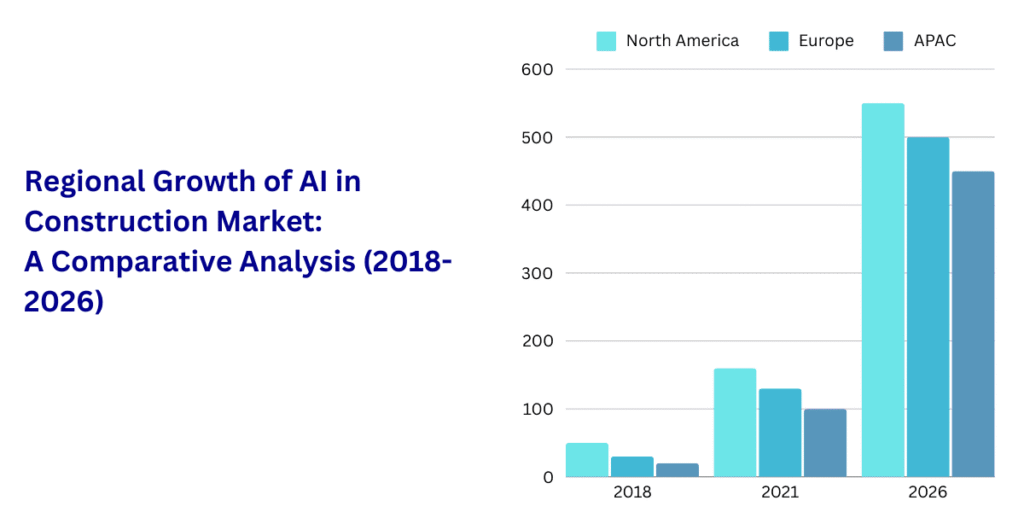
Sustainability is weaving in, too. AI optimizes for low-carbon materials, helping meet green regulations without raising costs. And edge computing means faster processing on-site, no more waiting for cloud uploads. The market’s exploding, projected to hit $5 billion this year alone, driven by labor shortages pushing firms to automate. For contractors, this means staying ahead isn’t optional. It’s how you scale.
Conclusion
AI isn’t just construction estimating. It’s reshaping the rules for how we build in 2025. From thorough takeoffs to analyzing patterns in data that make every bid competitive. It’s tackling the challenges that have stressed the contractors for decades, that are endless hours, doubts, and budget overruns. No doubt, there are hurdles of data gaps or upfront investments. But AI payoffs in accuracy, speed, and confidence far outweigh them.
Tools like STACK and Handoff are making it accessible, while trends like digital twins promise even tighter control over costs and timelines. That’s the edge AI gives, but only when paired with your hard-earned expertise. It’s an exciting shift, one that levels the field for solo operators and big firms alike. Step in now, and watch your workflow and your wins transform.
Don’t let outdated methods hold you back. 2025 is here, and so is the tech to make estimating effortless. Partner with ALM Estimating today for expert-backed AI integration that combines cutting-edge tools with human precision. Contact us now!
FAQs:
Q1. What exactly is AI takeoff software, and how does it work for everyday bids?
AI takeoff software is a digital helper that automatically measures and counts items from your project plans, like lengths of pipe or areas of flooring. It works by scanning files with smart algorithms, pulling out quantities in minutes. For a typical home remodel, it might calculate drywall needs from a single PDF, letting you focus on pricing instead of measuring. Just upload, review, and export, simple as that, with built-in checks to catch oddities.
Q2. Can AI really improve accuracy in construction cost estimates?
Yes, absolutely. AI boosts accuracy by analyzing patterns from thousands of past jobs, spotting things like regional price swings or material waste. Studies show it cuts errors from 15% in manual work to under 5%. For example, on a warehouse build, it might adjust for steel volatility, keeping your bid tight. But pair it with your site visits for the full picture.
Q3. What are the main limitations of using AI for estimating?
The biggest hurdles are needing clean, up-to-date data to train the tools and the initial cost for software, which can run $10K for advanced setups. It also struggles with super-unique projects, like historic renovations, where human judgment shines. Integration with legacy systems can take time, too, but most providers offer support to ease that.
Q4. How does machine learning fit into construction estimating?
Machine learning is the brain behind AI. It learns from project histories to predict costs, like forecasting labor for a rainy-season job based on similar builds. Tools use it to refine estimates over time, getting smarter with each use. A contractor might input past bids, and it outputs tweaks for the next one, reducing guesswork by 25% on average.
Q5. Are there free or low-cost AI tools for small contractors?
Sure, options like free trials of STACK or Beam AI let you start small without big spends. Basic versions handle core takeoffs for under $100/month, scaling as you grow. They’re great for solo pros doing residential work, with tutorials to get you up quickly.
Q6. How is AI helping with affordable roofing estimates for contractors?
AI scans roof plans to count shingles, slopes, and vents precisely, factoring in local weather data for durable choices. It pulls real-time material prices, helping craft bids that win without skimping. One roofer cut quote times by 60%, landing more steady gigs.
Q7. What trends in AI estimating should I watch for in 2025?
Key ones include real-time digital twins for virtual walkthroughs and AI tied to sustainability metrics, like low-emission material picks. Expect more mobile apps for on-site tweaks, making bids collaborative and fast in a market growing 20% yearly.
Q8. Can AI handle complex projects like bridges or hospitals?
Definitely, it scales with models trained on massive datasets, predicting everything from foundation depths to HVAC runs. For a hospital, it might simulate phasing to minimize disruptions. Accuracy hits 92% on big jobs, but always loop in engineers for compliance.
Q9. How do I get started with AI in my estimating workflow?
Start small: Pick a tool with a trial, upload a recent plan, and compare its output to your manual one. Train your team with short videos; most take a day. Track a few bids to measure time saved, then expand. It’s low-risk and high-reward.
Q10. Is AI secure for sensitive bid data?
Top tools use bank-level encryption and comply with standards like GDPR, keeping your plans and costs locked down. Cloud backups mean no data loss, and audit logs track access. Just vet providers for certifications before diving in.