
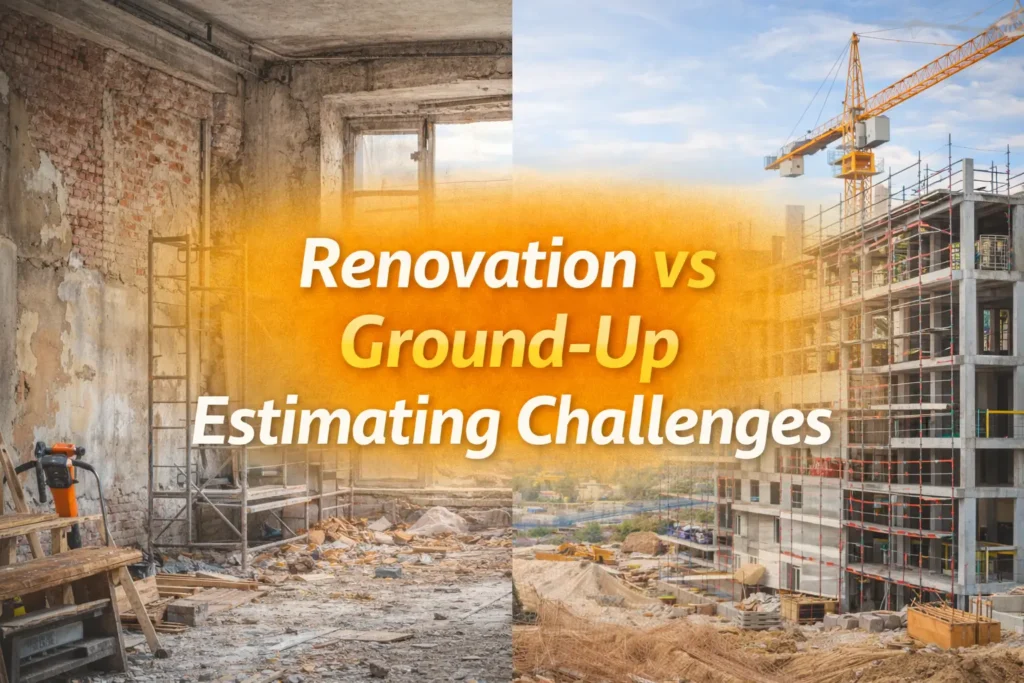
Renovation projects are work done on buildings that already exist. This is also called retrofit construction or working within existing structures. It means fixing, changing, or making a building bigger. Ground-up construction is different. It starts on empty land. Workers clear the land, build the base, and create a brand-new building from the start. This is why renovation vs ground up construction estimating is harder. Estimating renovation projects’ challenges are greater than ground up construction cost planning because old buildings can hide problems.
In new construction, cost planners have a simpler job. The plans are new. The land is checked early with soil tests and surveys. Materials can be counted clearly. Costs match today’s prices for workers, supplies, and machines. There are usually fewer surprises once work begins.
Renovations are not the same. Builders must use what is already there. Estimators must think about walls, floors, and ceilings that hide problems. These hidden areas can create hidden construction risks and unforeseen work. When workers open things up, they may find damage. This can change the cost and time of the project.
Unknown Conditions & Hidden Scope
Planning costs for renovations have more risk than building new. Old buildings can hide problems that no one sees at first. These hidden construction risks often appear only after work starts.
Old buildings may have unsafe wiring. Pipes may be rusty or too small. There may be asbestos, lead paint, mold, wood rot, termite damage, or old heating and cooling systems. Many of these systems do not meet today’s rules. These are all existing conditions that must be fixed.
A small job can quickly become big. A kitchen update may uncover rotten wood under the floor. Workers must then replace the wood and fix the base. A bathroom update may show that air systems are too small. This may require a full system change.
Many renovation jobs cost 10–30% more than first planned. This is often because of unforeseen work and hidden construction risks. To lower these problems, estimators take careful steps:
- Conduct detailed initial walkthroughs using moisture meters and thermal imaging for non-invasive clues
- Perform selective exploratory demolition early to expose and document problem areas
- Bring in specialists promptly, structural engineers, hazardous-materials inspectors, MEP consultants
- Use 3D laser scanning for precise as-is records when the budget supports it
- Apply realistic contingencies of 10–20% . Frequently, 15%+ for buildings pre-1980 or with complex history. Compared to the 5–10% typical for new builds
These steps help turn guessing into careful planning. They reduce cost overruns, disputes, and delays.
Risk Allowances vs Ground-Up Certainty
Risk planning is very important. If you ignore risk, the project can fail.
What Makes Ground-Up Estimating More Certain
Ground up construction cost planning is more certain. Everything starts new. Estimators use standard prices and past project data. Materials are counted clearly. Work follows normal patterns. Weather and permits can be planned in advance. This makes costs easier to predict.
Why Renovations Bring Higher Uncertainty
Renovations bring more unknowns. Hidden construction risks, unforeseen work, and changing existing conditions can increase cost. Because of this, extra money must be added to protect the budget.
How Contingencies Are Layered in Renovations
Industry practice in 2025–2026 commonly splits contingencies into three main types:
Design contingency: for gaps, ambiguities, or interpretation issues in the plans
Construction contingency: for surprises in methods, sequencing, or site conditions
Owner contingency: for client-requested changes, material price fluctuations, or market shifts
Wider Cost Ranges in Renovations
Renovation estimates often show bigger price ranges. For example, electrical work in new construction may cost $12–15 per square foot. In a renovation, it may cost $18–30 per square foot because of hidden wiring and existing conditions.
The Trade-Off with Higher Contingencies
Adding 10–20% extra money protects the project. But it can make the price look higher than others.
If risks are not included, there may be change orders, lower profit, and delays. This is common in renovation vs ground up construction estimating.
Documentation Challenges
Good documents help make good estimates. New buildings start with clear drawings and 3D models. Everything is planned from the beginning.
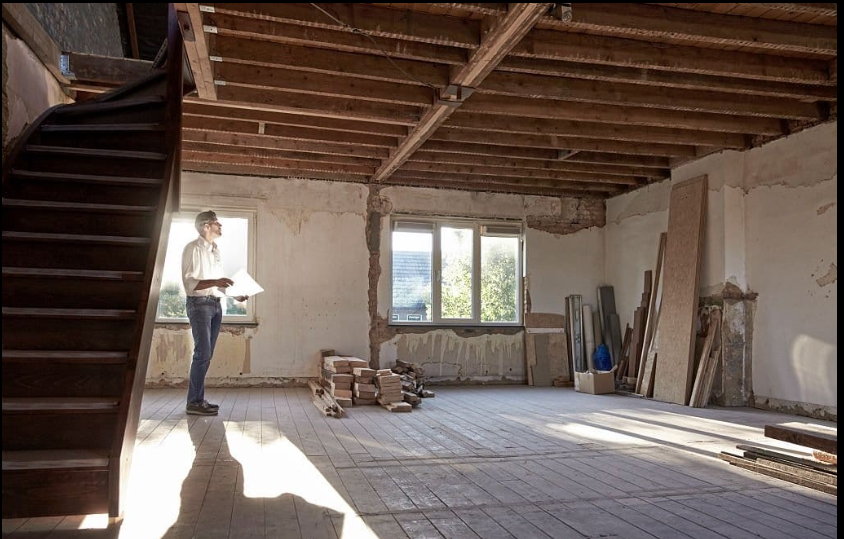
Renovations may have old or missing drawings. The real building may not match the old plans. Workers must measure, take photos, and sometimes open walls to check existing conditions.
This creates problems like:
- Code compliance in retrofits
- Incomplete scope definitions
- Difficulty matching existing materials/finishes
- Challenges integrating new systems with legacy infrastructure
Before final pricing, experts create existing conditions reports. They use scanning tools, photos, and small test openings. Digital tools help compare new plans with the real building.
Poor documents increase hidden construction risks. They can cause mistakes, rework, and disputes. Ground-up projects usually have clearer documents and tighter estimates.
When Renovation Projects Need Expert Estimators
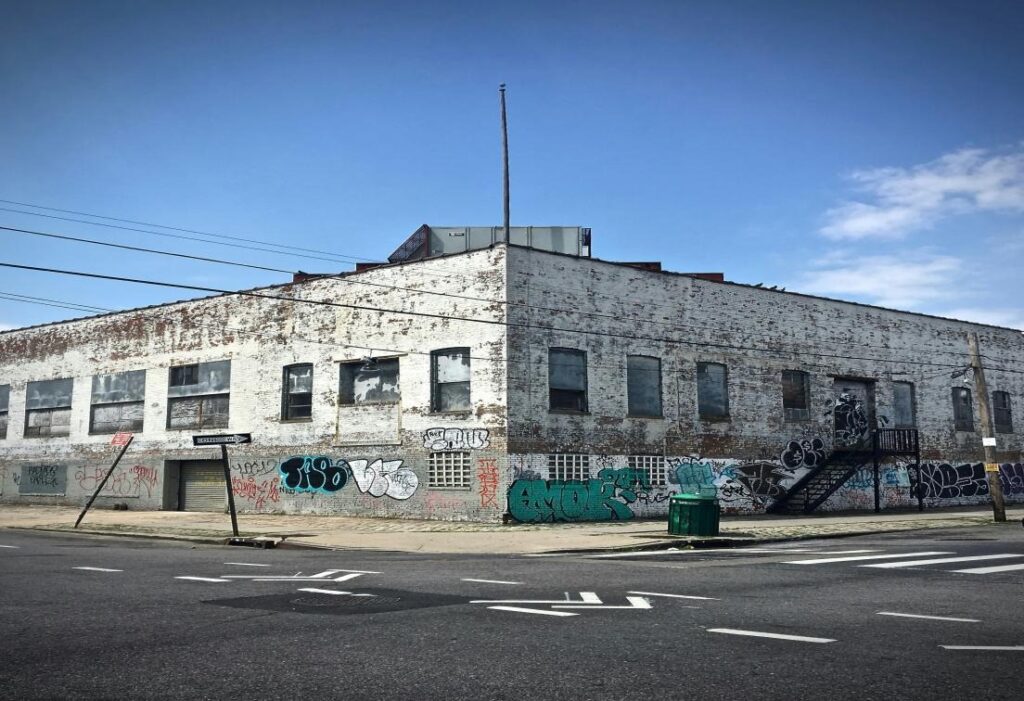
Not every project needs a specialist. But renovations often do, especially large or complex ones. Small jobs like painting or flooring may not need deep review. But structural changes, historic repairs, or building reuse projects require experts. These professionals understand retrofit construction and working within existing structures. They bring:
- Knowledge of retrofit building rules
- Experience with hidden construction risks
- Skill in lowering cost without lowering quality
- Strong subcontractor pricing networks
Hiring experts early helps prevent costly surprises. This improves budget control and project success.
Additional Considerations for Better Estimating Outcomes:
Several other factors affect renovation vs ground-up construction estimating.
1. Sustainability: Renovations can reuse materials and reduce waste. But making old buildings energy efficient can cost more. Ground-up projects can plan green features from the start.
2. Market Volatility: Both project types face price changes. But renovations are more sensitive when matching old materials. Skilled labor is also harder to find for detailed renovation work.
3. Technology:
Modern tools help improve estimating. Drones, 3D models, and digital takeoff tools reduce mistakes. These tools are very helpful when dealing with existing conditions and hidden construction risks.
Conclusion:
Ground-up construction is easier to plan. Everything starts new, so costs and materials are clear. Renovations are harder because the building is already there. Hidden problems and unknown conditions can appear. Unseen work can make the project cost more and take longer. Renovations need careful review and extra budget for risks. Good estimators help find hidden risks and plan correctly. Understanding renovation vs ground up construction estimating keeps projects on time and on budget. With careful planning, projects go smoothly and safely.
Ready to Avoid Common Pitfalls in Construction Estimating?
From unknown conditions in renovations to predictable ground-up builds, ALM estimating deliver accurate forecasts tailored to your needs. Discover how we can protect your investment. Request a quote today!
FAQs:
Q1. What is relative costs of new build vs a total gut job?
A. A total gut renovation often costs 80-120% of a new build per square foot due to unknowns like structural fixes and code updates. While ground-up offers more predictable expenses around site prep and materials.
Q2. Building a new house instead of renovating, what unknowns do we face?
A.In new builds, unknowns include soil quality, permitting delays, and material price fluctuations; renovations add hidden issues like asbestos or wiring, making estimating 20-30% riskier.
Q3. Better to buy and renovate vs build new?
A.Buying and renovating can seem cheaper upfront but often spirals with overruns (e.g., 50-100% above estimates). Building new provides better long-term value if land is affordable and you want custom features.
Q4. Renovation’s labor cost is outrageous. How can they build new houses in this market to be profitable?
A.New builds benefit from economies of scale and streamlined processes, keeping labor at $30-60/hour; renovations involve specialized, piecemeal work, driving labor costs higher and profitability lower without accurate estimates.
Q5. Between renovation and rebuilding, which construction method is economical?
A.Rebuilding (ground-up) is more economical for severely outdated structures due to fewer variables; renovation saves on demo but estimating is tougher with hidden risks, often making it less cost-effective overall.
Q6. Which is more cost efficient: purchasing an old, condemned house and fixing it up, or building new construction from scratch?
A.Building new is often more efficient long-term, avoiding endless fixes; fixing up can be cheaper if minimal, but poor initial estimates for hazards like mold can double costs.
Q7. Why do remodeling costs approach, if not surpass, those of building a house from scratch?
A. Remodeling involves working around existing constraints, leading to custom solutions and surprises that inflate estimates; new builds allow standardized planning, reducing waste and keeping costs lower per square foot.