
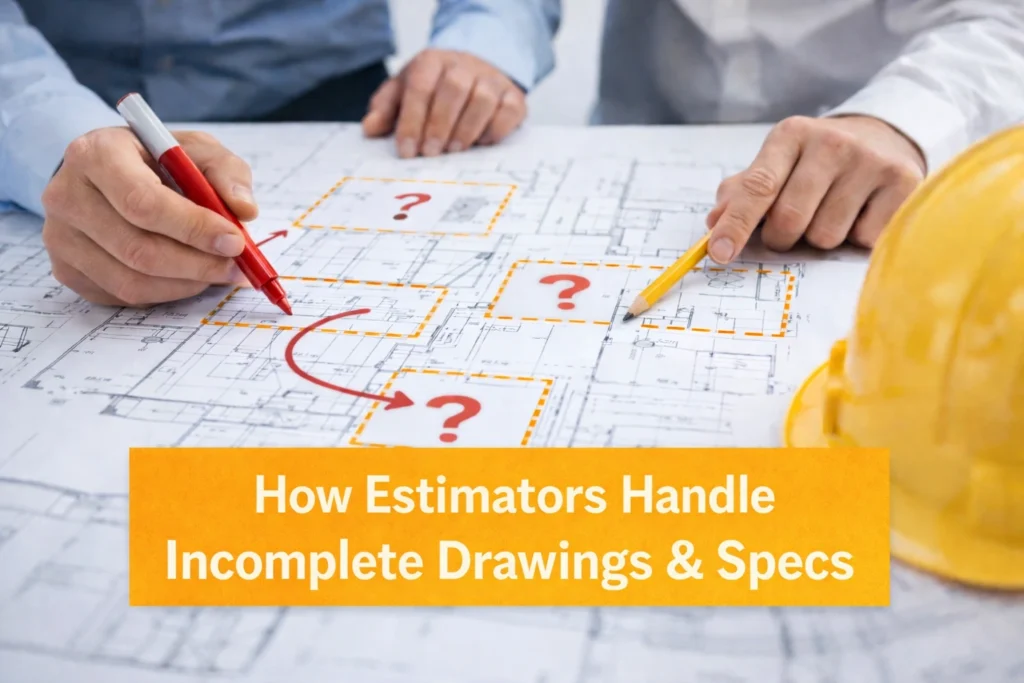
Incomplete drawings and missing specifications are a reality in construction estimating. Very few projects come with perfectly coordinated plans, especially during early bidding stages or fast-track projects.
Experienced estimators don’t wait for “perfect” documents. Instead, they use structured methods to identify gaps, assess risk, and still deliver reliable estimates without exposing contractors to unnecessary losses.
Why Incomplete Drawings Are So Common in Construction
Construction projects move fast, and design development often continues alongside estimating and bidding. As a result, drawings are frequently issued before every detail is finalized. This isn’t always a mistake, it’s part of how modern construction operates.
Common reasons drawings are incomplete include:
- Design still in progress
- Fast-track or design-build delivery methods
- Budget-driven early bidding
- Poor coordination between disciplines
- Late changes by owners or consultants
Understanding why documents are incomplete helps estimators respond correctly.
What Counts as Incomplete Drawings or Missing Specs?
Not all missing information looks obvious. Some gaps are subtle and easy to overlook, which makes them dangerous during estimating. Professional estimators are trained to spot both visible and hidden omissions.
Examples of incomplete information include:
- Missing dimensions or elevations
- Undefined material types or finishes
- Unspecified equipment models
- Incomplete MEP routing details
- Absent scope descriptions in specifications
Identifying these gaps early is the first step toward risk control.
The Risks of Estimating Without Complete Information
Estimating with incomplete drawings increases uncertainty. If that uncertainty isn’t managed properly, it directly impacts profitability. Unaddressed gaps often turn into disputes, change orders, or losses later.
Major risks include:
- Underpricing due to missing scope
- Incorrect material assumptions
- Labor overruns from unclear installation details
- Scope disputes during construction
- Reduced client trust
Professional estimators focus on managing risk, not eliminating it.
How Professional Estimators Approach Incomplete Drawings
Experienced estimators don’t panic when drawings are incomplete. They follow a systematic process designed to reduce uncertainty and document assumptions. This process keeps estimates defensible and transparent.
Core principles include:
- Never guessing silently
- Clearly identifying unknowns
- Making conservative, logical assumptions
- Communicating risks upfront
This approach protects both the contractor and the client.
Step 1: Identify and Document Missing Information
The first step is not pricing, it’s analysis. Estimators carefully review drawings and specifications to locate missing or unclear elements.
This review is deliberate and methodical.
Estimators typically flag:
- Undefined assemblies
- Missing sections or details
- Conflicting information between drawings
- Notes that reference non-existent specs
Documenting these gaps prevents surprises later.
Step 2: Use Industry Standards to Fill Gaps
When information is missing, estimators rely on recognized construction standards instead of assumptions. This ensures estimates remain realistic and defendable.
Common reference points include:
- CSI MasterFormat divisions
- Typical assembly details
- Code requirements
- Manufacturer standards
- Past project benchmarks
Using industry norms creates consistency and reduces guesswork.
Step 3: Apply Conservative Assumptions
Professional estimators apply risk-aware assumptions, not optimistic ones. Conservative assumptions protect margins when scope is unclear. These assumptions are always documented, never hidden.
Examples include:
- Higher material quality allowances
- Increased labor hours for complexity
- Additional installation allowances
- Conservative productivity rates
This approach reduces the chance of underpricing.
Step 4: Include Allowances and Contingencies
Allowances are a powerful tool when drawings are incomplete. They create flexibility without inflating the entire estimate. Estimators use allowances strategically.
Typical allowances cover:
- Undefined finishes
- Pending equipment selections
- Incomplete MEP scopes
- Design-dependent components
Contingencies account for unknown risks that can’t be quantified precisely.
Step 5: Clearly State Assumptions and Exclusions
Transparency is critical when estimating with incomplete documents. Clear assumptions protect contractors during contract negotiations and project execution. Professional estimates always include written clarification.
Common assumption disclosures include:
- Scope boundaries
- Material assumptions
- Labor productivity assumptions
- Excluded systems or components
This reduces disputes and strengthens legal defensibility.
How Estimators Communicate with Clients and Designers
Communication is just as important as technical estimating. Estimators actively engage with clients, architects, and engineers to clarify gaps. This collaboration improves estimate quality.
Communication methods include:
- RFIs during estimating
- Clarification logs
- Scope review meetings
- Written assumption summaries
Strong communication turns uncertainty into managed risk.
Early-Stage Estimating vs Bid-Stage Estimating
Incomplete drawings are more common in early-stage estimating, but the handling approach changes based on project phase. Estimators adjust their strategy accordingly.
Early-stage estimates focus on:
- Conceptual benchmarks
- Cost per square foot
- High-level allowances
Bid-stage estimates focus on:
- Detailed takeoffs
- Clarified scope assumptions
- Reduced contingency ranges
Understanding the context matters.
Common Mistakes Contractors Make with Incomplete Drawings
Many estimating problems occur not because drawings are incomplete, but because risks are ignored or undocumented. Avoiding these mistakes protects profitability.
Common errors include:
- Assuming missing scope is “not required”
- Failing to document assumptions
- Underestimating labor impact
- Ignoring coordination gaps
- Relying on optimistic interpretations
Professional estimators take the opposite approach.
Why Outsourced Estimators Excel with Incomplete Information
Third-party estimating firms handle incomplete drawings daily across multiple project types. Their experience allows them to manage uncertainty efficiently. They bring structured risk controls to the process.
Key advantages include:
- Broader project exposure
- Strong benchmarking data
- Objective risk assessment
- Clear documentation standards
This is why many contractors outsource early-stage estimates.
Final Thoughts
Incomplete drawings and missing specifications are unavoidable in construction. What separates successful contractors is how these gaps are handled during estimating.
Professional estimators don’t guess, they analyze, document, and manage risk using proven methods. This approach leads to more accurate estimates, fewer disputes, and stronger profit protection.
Incomplete drawings shouldn’t mean inaccurate estimates. ALM Estimating helps contractors:
- Price incomplete plans confidently
- Manage estimating risk
- Document assumptions clearly
- Deliver defensible, professional estimates
Request an estimate review today!
FAQs:
Q1. How do estimators price incomplete drawings?
A. They use industry standards, conservative assumptions, and documented allowances.
Q2. Are incomplete drawings normal in construction?
A. Yes. They are common, especially in early-stage and fast-track projects.
Q3. Do incomplete specs increase estimating risk?
A. Yes, but professional risk management techniques reduce exposure significantly.
Q4. Should contractors bid on incomplete drawings?
A. They can, as long as assumptions and risks are clearly documented.
Q4. Can outsourcing help with incomplete plans?
A. Yes. Professional estimators specialize in managing uncertainty effectively.