

Making a winning bid means that you must calculate the takeoff right. As a contractor, you have the experience that missing any small thing can turn your project success into a big headache. It’s frustrating when you have lost your bids and potential projects just because of your miscalculations. It kills your profits. This blog will guide you about the practical construction takeoff checklist that covers everything from basic to trade-specific details.
Understanding the Basics of a Construction Takeoff
A construction takeoff is all about pulling quantities from plans and specs to figure out what materials, labor, and equipment you’ll need. It’s not just about counting bricks or measuring the square feet. It’s the foundation for your entire estimate. Getting this wrong, and you will lose the bid. Bids will be either too high to win or too low to make a profit.
Start by assessing your documents that are blueprints, site plans, specs, etc. Double-check that you’re working with the latest versions. Using outdated drawings is one of the biggest mistakes contractors make, which leads to rework and delays. For example, if a client changes the window sizes and you miss the update, you’ll be ordering the wrong amount of window glass and framing.
Next, organize your approach. Divide the project into phrases like site prep, foundation, structure, etc. This makes your work manageable. It helps spot inconsistencies early. Remember, accuracy here sets the tone for the whole bid.

What to Check Before Finalizing Your Takeoff
Before finalizing your numbers, you must perform a quick verification process. Many contractors make mistakes in this very step because of tight deadlines.
Use consistent measurement
First of all, you must confirm all measurements. Always use consistent units like feet, yards, or meters. If you are using digital tools must calibrate your tools. Inaccurate scaling can raise your costs by 10-20%.
Look for missing items.
Look for missing items in the plans that are mostly not obvious. These items may include door openings, window accessories, anchoring hardware, and waste allowances. For instance, in concrete work, don’t just count the pour volume; you may add in formwork, rebar ties. A contingency waste factor of 5-10% for spills and surprise orders.
Prevent Change Orders via Cross-referencing.
Always cross-reference your specs with drawings. If the plans don’t match your notes, clarify them before proceeding. This step is necessary for preventing costly change orders.
Sanity Check
Finally, do a sanity check. Does the total make sense for the project size? Compare it to the past project’s history. If your material takeoff for a similar building project was 20% lower last time. Then make an analysis that why it happened.

Typical Items Contractors Forget in a Takeoff
As a contractor, you have experienced that things do not go as well as calculated while bidding. A confident bid can be very frustrating if you fail to account for something essential. Some frequent oversights are.
- Openings and Cutouts
These are doors, windows, and HVAC. It may reduce material needs but add labor for detailing. Always subtract these from gross areas.
- Accessories and Hardware
These are hinges, seals, or fasteners. They’re small but add up to the costs, especially in finishes like drywall or tiling.
- Anchoring and Supports
In structural work, bolts, brackets, and embeds are crucial. But these are easy to miss if not obvious on the plans.
- Waste and Overage
Always factor in 5-15% extra for cuts, breakage, or errors. For lumber, it’s often higher due to odd lengths.
- Temporary Items
Scaffolding, shoring, or protection materials may not be permanent. But still cost money.
By adding these to your estimator checklist, you reduce takeoff mistakes. These mistakes could upset your budget. One contractor shared in a Houzz forum how forgetting waste in a roofing job cost them an extra $2,000. Learn from the experience of others.
Trade-by-Trade Checklist for Accurate Quantity Extraction
To make this practical, let’s break it down by major trades. Looking at each trade individually helps ensure nothing gets overlooked from laying the concrete foundations.
Concrete Trade Checklist
Measure the slab areas, footing lengths, and column volumes. Include rebar by weight or length. Account for formwork square footage and any special mixes. Add pumps, vibrators, and curing compounds.
Don’t forget expansion joints or waterproofing membranes. For accurate quantity takeoff for concrete contractors, always verify soil reports for any extra excavation.
MEP (Mechanical, Electrical, Plumbing) Trade Checklist
For MEP, count fixtures such as sinks, toilets, outlets, and switches. Use linear feet for pipes, ducts, and wiring runs. Include fittings, valves, and hangers. Factor in insulation for pipes and fire stopping.
Also check for backups like generators or sump pumps. MEP can be tricky with hidden runs, so trace them carefully on blueprints.
Finishes Trade Checklist
Must check that you use square footage for flooring, walls, and ceilings. Check for Paint or coating volumes, including primers. Account for trim lengths such as baseboards, crown molding. Hardware and specialties like knobs and hinges, mirrors, shelving, etc.
In the end, waste is higher and can be up to 15% for tiles due to cuts around edges. Using this structure streamlines bid preparation and helps catch missing quantities early.

How Digital Takeoff Tools Streamline Your Workflow
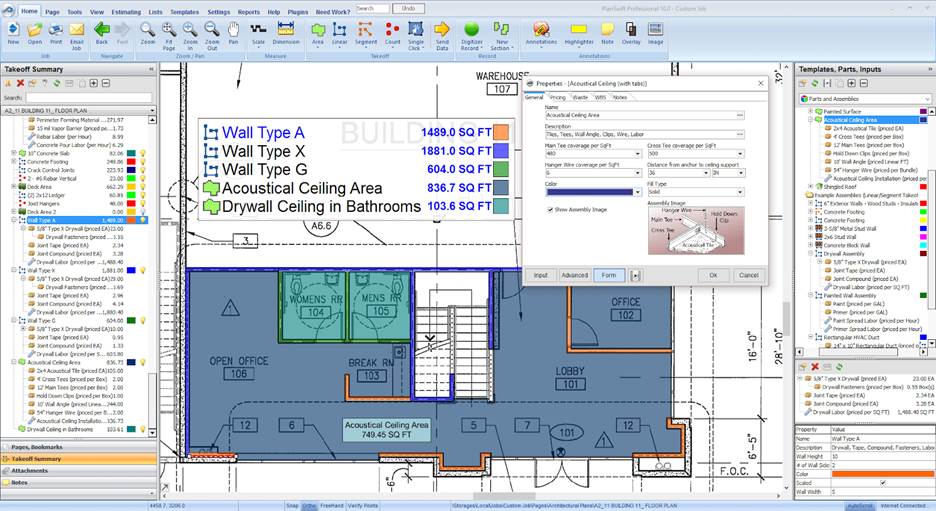
With the evolving days, things are evolving too, and Gone are the days of manual scaling are becoming outdated. Advanced digital tools like PlanSwift takeoff software can change the game by automating measurements and calculations.
These programs let you upload blueprints, click to measure areas or lengths, and instantly generate quantities. Benefits include faster turnarounds, cutting takeoff time by up to 80% and fewer errors from misreads.
They also integrate with estimating software, pulling costs directly into your bid. For blueprint measurement, features like auto-count for symbols (think rebar or outlets) save hours.
One big plus point is the collaboration. Share files with your team for reviews without printing stacks of paper. If you’re handling multiple bids, this efficiency means more opportunities without burning out.
Benefits of Professional Takeoff Services
Sometimes, doing it all yourself isn’t the smartest move, especially on complex jobs. Bringing in professional quantity takeoff services or construction takeoff services can make a real difference.
Expert Opinion
They provide expert eyes that spot issues you might miss, like hidden contingencies in specs. This leads to more accurate bids, helping you win without undercutting profits.
Time Saving
Time savings are huge. You get back hours to site visits or client meetings. Plus, they often use advanced tools, ensuring consistency across projects.
Affordable
Cost-wise, it’s often more affordable than hiring full-time staff, especially for smaller firms. Think of it as scaling your capacity without the overhead.
Accuracy
The use of advanced digital tools gives the accuracy you want. It gives you the exact cost and amount you need for a project.
Incorporating these practices isn’t just about avoiding losses. It’s about positioning yourself to win more work. Accurate takeoffs lead to competitive yet profitable bids, building your reputation over time. Remember, every detail adds value. Whether it’s double-checking anchors or using software for speed.
Conclusion
A thorough construction takeoff checklist is your best defense against the uncertainties of bidding. It turns potential pitfalls into strengths, letting you submit confident proposals that reflect real costs and timelines. By addressing common forgets like waste or accessories, and using trade-specific breakdowns, you minimize risks that eat into margins. Digital tools make your work efficient, while professional services offer expertise. This approach saves your time and money. Moreover, it builds trust with clients, leading to repeated jobs.
Win more bids without cutting your profits. Use the ALM Estimating trade-by-trade construction takeoff checklist to eliminate costly oversights and submit estimates for winning bids. Get your quote now!
FAQs:
Q1. What is a construction takeoff exactly?
A construction takeoff is the process of quantifying all materials, labor, and equipment needed from project plans and specs. It forms the basis of your estimate, ensuring you don’t over- or underbid. Accurate takeoffs help avoid surprises on-site and keep projects profitable.
Q2. Why do contractors often forget waste in takeoffs?
Waste gets overlooked because it’s not always visible on plans. Factors like cuts, breakage, or spills add 5-15% to materials, depending on the trade. Building in allowances early prevents budget shortfalls and reduces last-minute orders.
Q3. How does a trade-by-trade checklist help?
It organizes the takeoff by sections like concrete or MEP, making it easier to spot misses. This method ensures comprehensive coverage, improves accuracy, and speeds up the process for busy contractors handling multiple bids.
Q4. What are common takeoff mistakes to avoid?
Inaccurate measurements, using old drawings, or ignoring specs are big ones. Also, forgetting items like anchors or overage can inflate costs later. Regular reviews and tools help catch these before they become problems.
Q5. How do digital tools like PlanSwift improve takeoffs?
They automate measurements, reduce errors, and integrate with estimating software. Users report cutting time by half, allowing more bids without sacrificing quality. It’s especially useful for complex blueprints.
Q6. When should I consider professional takeoff services?
If you’re overwhelmed with bids or lack in-house expertise, outsourcing helps. It provides precise quantities quickly, freeing you for core work. Many contractors see better win rates after making the switch.
Q7. What’s the difference between material takeoff and quantity takeoff?
Material takeoff focuses on physical items like lumber or steel, while quantity takeoff includes broader elements like labor hours. Both are key to completing estimates in construction projects.
Q8. How can I incorporate LSI keywords into my process?
Terms like “blueprint measurement” or “bid preparation” naturally fit when documenting. They help in searches but focus on practical use for real accuracy in your work.
Q9. Are there benefits to outsourcing for small contractors?
Yes, it cuts overhead and accesses Pro Tools without buying it. Testimonials show small firms winning bigger jobs thanks to precise, fast takeoffs from services.
Q10. How long does a typical takeoff take?
It varies by project size. Small jobs might take hours, larger ones days. Digital tools shorten this, but thorough checks are essential to avoid costly revisions later.