

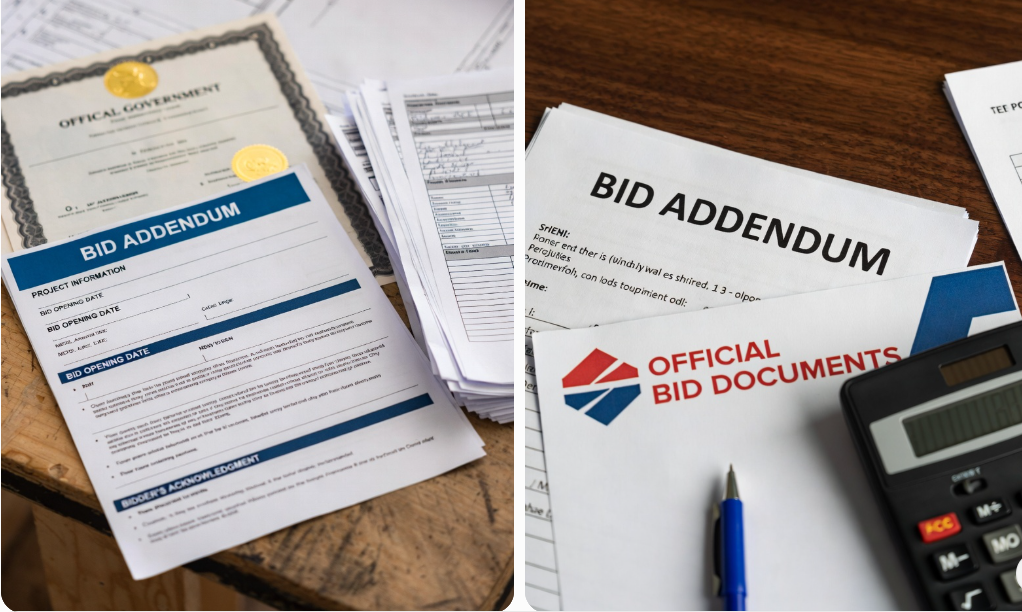
In construction bidding, nothing stays locked in place from the first look at the plans to the day you submit. Owners, architects, and engineers throw changes at you constantly, very often right up against the bid deadline. These show up as bid addendums: official paperwork that revises drawings, updates specs, adjusts the scope, or tweaks instructions.
Having reliable estimating support for bid addendums can literally decide whether your bid wins or misses by a mile. Addendums are everyday stuff in 2026. Material prices shift, answers to questions finally roll in the original set that has to be fixed fast. When your own team tries to rework everything by themselves with almost no time left, it’s easy to screw up. You skip over an important detail, come in too low and get hammered if you win, or pile on extra padding everywhere and cost overruns.
What Are Bid Addendums: A Simple Breakdown
A bid addendum (plural: addenda) is a formal update issued during the bidding period, before anyone submits their final price. It’s not a change order, those come after the contract is signed. Instead, it’s a way to fix, clarify, or add to the original bid documents so every bidder works from the same set of facts.
Common things addendums cover include:
- Revised drawings with clouded changes to show what’s new
- Updated material specs, like switching to a different brand or grade
- Answers to bidder questions (RFIs) that affect scope or pricing
- New scope items added or old ones removed
- Extended bid deadlines or new submission rules
Each addendum becomes part of the official bid package. Every bidder has to acknowledge it, usually by checking a box on the bid form or signing a statement that says they’ve reviewed the changes and priced them in. Skip acknowledging one, and your bid can get thrown out right away.
Why Addendums Disrupt Your Original Estimates
Your team spends days or weeks building a solid estimate based on the initial plans and specs. Then an addendum lands in your inbox, sometimes just days or hours before the deadline. Suddenly, that careful work needs a full redo.
Here’s why it cost you
1. Tight Deadline: Bid deadlines don’t always move. You have to recheck takeoffs, recalculate quantities, update unit prices, and adjust labor or subcontractor quotes, all fast.
2. Scope Revisions: A small note might add rebar, change finishes, or require extra site work. If you miss it, your bid is too low and you eat the cost later and you lose the job.
3. Cost Ripple Effects: One change affects many line items. New drawings might increase concrete volume, which hikes material, labor, and even equipment needs.
4. Last-minute changes add stress: Estimators juggle multiple bids already. Dropping everything for an addendum release pulls focus and raises the chance of mistakes.
In today’s market, with material volatility and tight schedules, these disruptions hit hard. A single overlooked addendum can turn a profitable job into a loser.

The Challenges of Rapid Repricing
Repricing after an addendum,also called bid updates or repricing feels like starting over with a ticking clock. Common hurdles include:
- Tracking every change: Addendums come as PDFs with revisions clouded or highlighted, but comparing old vs. new takes time. Missing one cloud or spec note means wrong quantities.
- Updating cost: Prices for steel, lumber, or labor shift often in 2026. You need current supplier quotes, but chasing them during crunch time slows everything.
- Subcontractor coordination: Subs might need to rebid their portions. If they’re busy, delays happen, and you can’t wait.
- Version control mess: Emails, downloads, and markups pile up. Without a system, teams work from different versions and errors creep in.
- Risk of over- or under-estimating: Rush jobs lead to padding for safety, losing competitiveness or optimistic assumptions losing money if you win.
These issues make rapid repricing one of the toughest parts of bidding. Many contractors admit they’ve lost jobs or margins because they couldn’t handle addendums fast enough.
The Big Risk: Missing Scope Changes in Bid Updates
Scope revisions are sneaky. An addendum might look minor, a clarification or small drawing tweak. But it adds real costs. Missing them is expensive.
For example, a note saying “provide temporary shoring” adds labor and materials you didn’t plan for. If you miss these, there will be two possibilities. Either you win the bid but lose money during construction or you argue later that it was extra work. But the owner points to the addendum you acknowledged making claims harder.
Good estimating support for bid addendums includes double-checking every line against the latest docs to catch these risks early.
Why Outsourcing Helps During Bid Revisions and Addendums
Many contractors handle addendums in-house at first. But as projects grow or bids pile up, internal teams get overwhelmed. That’s when addendum pricing services and outsourced estimating shine.
Here’s why outsourcing makes sense for revisions:
- Speed and Bandwidth: Professional estimating firms dedicate teams to your bid. They can turn around repricing in hours or days, not weeks, perfect for last-minute addendums.
- Fresh Eyes Catch More: Outsiders aren’t buried in your daily work. They spot scope revisions or cost impacts your team might overlook from familiarity.
- Cost Control: You pay per project or addendum, no full-time salary, benefits, or downtime. For busy seasons, it’s cheaper than overtime or hiring temp help.
- Access to Expertise: Outsourced estimators use the latest software for takeoffs, have current cost databases, and know tricks for quick repricing.
- Better Win Rates: Accurate, fast updates mean competitive bids without guesswork. Firms often report higher success when outsourcing revisions.
- Less Burnout : Your team focuses on winning work, building relationships, and running jobs, not endless revisions.

Conclusion:
Bid addendums come with the job in construction bidding. They’re just how things go. Owners and architects send them out to fix mistakes, answer questions, or add a bit more work, and sometimes they drop in right when you’re about to hit submit. The good news? Those changes don’t have to sink your shot at landing a job that actually makes money. The trick is dealing with them fast and right, without cutting corners on accuracy or building in so much extra that your price gets laughed out of the room. When your own crew tries to rework the whole estimate alone with the clock ticking, it’s easy to see what happens: takeoffs get sloppy, little scope additions slip right past, or you slap on a fat buffer “just in case” and now you’re either too cheap to cover costs or too expensive to win. Whether you lean on a trusted outsourced partner for addendum pricing services or strengthen your internal process, the goal stays the same, turning every last-minute change into proof that your team is sharp, thorough, and ready for anything.
Don’t let the next addendum catch you off guard. Get accurate, fast estimating support for bid addendums today. Reach out ALM estimating now and keep your bids sharp and competitive. Contact us now!
FAQs:
What exactly is a bid addendum?
A bid addendum is an official update sent out during the bidding period. It changes drawings, specs, scope, or instructions so everyone bids on the same information. Once issued, it becomes part of the contract documents if you win the job.
How many addendums are normal on a project?
It varies, but 1–5 is common in most jobs. Larger or more complex projects (schools, hospitals, public works) can see 8–15 or more, especially if RFIs pile up or the owner makes late design tweaks.
What happens if I miss an addendum in my bid?
You risk two big problems: your bid could be disqualified if you didn’t acknowledge it, or if you win, you’ll have to do the extra work at your own cost because you “acknowledged” the change by checking the box or signing.
How fast can you turn around estimating support for an addendum?
Most of the time we deliver revised takeoffs and pricing within 24–48 hours, sometimes same-day if the addendum is small and you send everything right away. Rush jobs are possible. Let us know your deadline.
Do I have to send you my entire estimate every time?
No. For quick addendum repricing, just send the addendum documents, your current bid file (or the relevant sections), and any affected subcontractor quotes. We work with what you have and focus only on the changes.
Is my bid information safe when I outsource estimating support?
Yes, 100%. We sign NDAs on every project and use secure file-sharing tools. Your numbers, strategies, and subcontractor contacts stay confidential.
How much does addendum pricing service cost?
It depends on the size of the addendum and how many line items change. Small revisions are often flat-fee, while bigger ones are priced per hour or per project. We always give a clear quote upfront. No surprises.
Can you help if the addendum comes out the day before bids are due?
Yes, that’s exactly when we get called most often. The sooner you send the files after the addendum release, the better. We prioritize last-minute requests to keep you in the game.
What’s the difference between addendum support and full outsourced estimating?
Addendum support is focused and fast. Just handling revisions and repricing on an existing bid. Full outsourced estimating means we build the whole bid from scratch. Many clients use us for both depending on workload.