
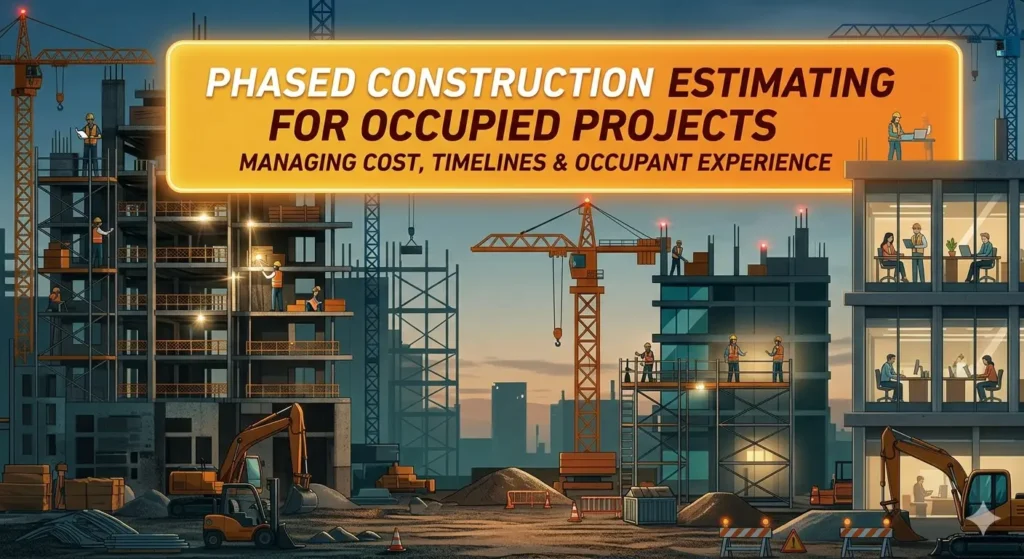
Estimates for phased construction projects split a big job into small steps. Each step finishes before the next starts. Some areas get work done first. Others wait. In an occupied building, one floor might close while others stay open. Or you fix one wing at a time. In occupied building construction estimating, the goal stays simple: finish work without stopping daily life.
This method gives clear checkpoints. You check costs and plans at each phase end. Early phases use rough numbers. Later ones get exact details. This cuts surprises. Cash flow improves too. You spend money in steps, not all at once. Teams plan better. Risks show up sooner. Fixes happen fast.
For example, in a busy office upgrade, Phase 1 might move people and set up temp walls. Phase 2 does the real work on empty floors. Phase 3 finishes and cleans up. Each step has its own budget and schedule. This guide provides the essentials of occupied building construction estimating. It highlights key strategies for phased project cost planning to ensure success.
What Phased Construction Means
Phased construction is the breakdown of large projects into manageable, sequential stages. The parts of the building remain operational during construction. This method is useful for occupied areas, where the entire site can not be used entirely. For instance, in a multi-story office renovation, you might complete one floor at a time. It minimizes downtime for tenants.
At its core, phased construction aligns with project planning. It provides checkpoints to refine estimates as more details emerge. According to industry practices, this approach starts with high-level feasibility. It helps control costs by spotting risks early such as material shortages or design changes. It ensures better resource allocation. In occupied buildings, phasing also incorporates “construction phasing strategy” to coordinate around occupants. This includes scheduling noisy work during off-hours.
Cost Impact of Working Around Occupants
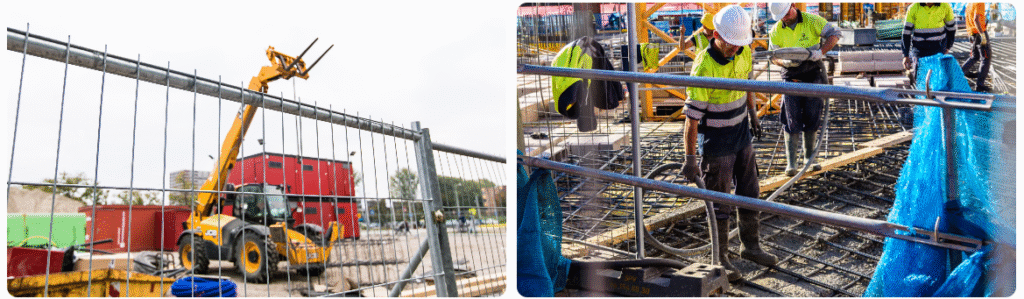
Occupied spaces raise costs. You cannot work at full speed. Access gets limited. Noise and dust bother people. Safety rules tighten. Studies show productivity drops 20-30% in these jobs compared to empty sites. Why? Workers stop and start often. They move tools around occupants. They clean more to keep the air clean.
- Extra costs come fast:
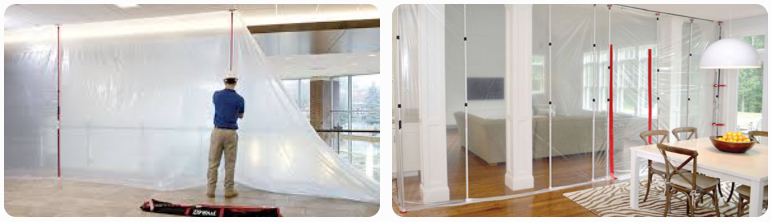
- Temporary barriers and dust walls
- Special quiet hours or weekend shifts
- Extra safety staff
- Noise monitors
- Better ventilation
These add 10-15% or more to the total. Insurance goes up too. Risks rise with people nearby. In hospitals, you phase small zones only. Patient areas stay open. This means more setup time per section. Mobilization costs repeat.
To estimate right, list high-impact vs. low-impact zones. Count lost hours from setups and moves. Add buffers for delays. Use software to model “working around occupants.” Skip this step, and bids fail or profits vanish.
Temporary Works & Sequencing Costs
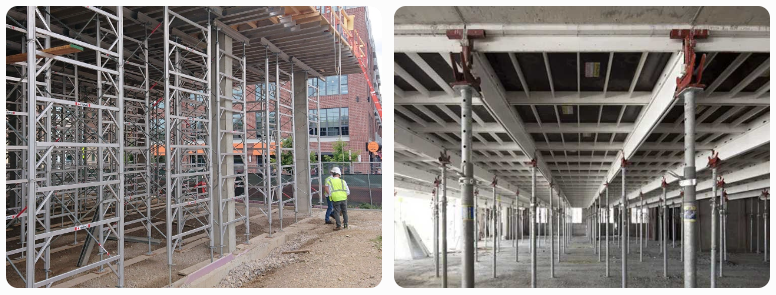
Temporary works are added in construction sequencing in phased projects. It provides support like scaffolding, shoring, or protective barriers. In occupied facilities, these elements are critical for safety and efficiency. But they come with significant costs that must be meticulously planned.
Key expenses break down as follows:
Design and Engineering: It requires hiring specialists to ensure compliance with standards like BS 5975. It includes load calculations and risk assessments.
Materials and Labor: High-quality, reusable systems reduce long-term costs. But initial outlays are substantial.
Sequencing Overheads: Phased installation means more time for inspections and adjustments, potentially. It adds 15-20% to timelines.
To optimize, integrate temporary works early in occupied building construction estimating. Appoint a Temporary Works Coordinator to oversee the process, preventing costly rework. In occupied spaces, factor in “occupied facilities” constraints. These include limiting vibrations or ensuring fire-rated barriers. These can drive up specialized material costs.
Safety and Access Assumptions:
Safety constraints in occupied construction sites are non-negotiable. It directly influences access assumptions and overall estimates. In phased projects, assumptions must cover everything from emergency egress to dust mitigation, with costs tied to compliance.
Key assumptions:
- Appoint a safety lead for temp works
- Run inspections at each phase start and end
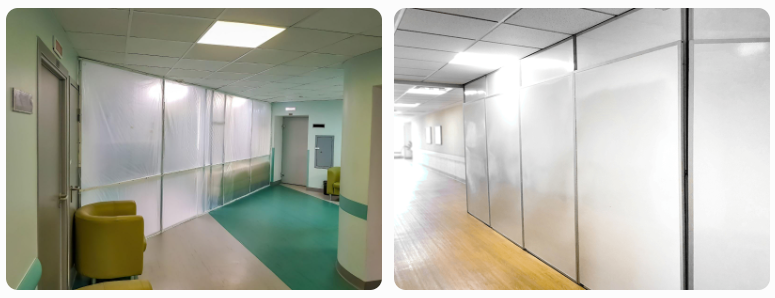
- Use strong barriers to split work zones from people zones
- Plan quiet times or off-hours for loud tasks
- Keep air clean with HEPA filters
- Add signs and lights for safe walking paths
In occupied buildings, safety protocols extend to air quality control, noise reduction, and fire safety. Assumptions should include enhanced PPE, temporary fire escapes, and phased evacuations if needed. Costs for these can add 5-10% to budgets, but they’re essential for risk management.
Follow OSHA rules strictly. Talk to occupants early. Get their input on access needs. Use sensors to watch air and noise real-time. Adjust fast if needed. In phased work, assume flexible access. Some tasks only on weekends. Others during lunch breaks. Build these limits into the estimate.
Why Estimating Errors Are Common in Phased Projects
Estimating errors plague phased projects due to their inherent complexity. It often stems from inaccurate takeoffs, overlooked productivity losses, or ignoring contingencies. In occupied buildings, these multiply. Fragmented phasing leads to repeated setups, labor, and hidden costs like occupant disruptions.
A frequent issue is relying on outdated data or generic benchmarks, ignoring site-specific factors in occupied facilities. For example, underestimating labor in tight spaces can cause overruns of 20-30%. Change orders, common in phased work, exacerbate errors if not forecasted.
Complexity from technology and scope creep also contributes. Nine out of ten major projects experience cost overruns globally. In phased estimating, early phases might use rough orders of magnitude. But failing to refine them leads to cascading mistakes.
Best Practices for Solid Estimates in Phased and Occupied Building Projects
Follow these five key steps to win bids and deliver strong results on phased construction projects in occupied buildings.
Talk to Occupants Early
Before you touch a single phase plan, sit down with the facility managers, tenants, and daily users. Ask them straight up: what hours are sacred, which areas can’t shut down even for a minute, how much noise they can handle, and where access absolutely must stay open. Write it all down and actually use it. Doing this early stops most of the angry calls, surprise halts, and expensive change orders that kill your schedule and budget later.
Model Phases in Detail with BIM or Scheduling Tools
Use Building Information Modeling (BIM) to build clear 3D views of each construction phase. Create precise digital sequences showing work zones, occupant paths, and temporary setups over time. Tools like Primavera P6 or Microsoft Project map out timelines and dependencies accurately. Early modeling reveals clashes between construction activities and occupied spaces before they become costly problems. Detailed models improve takeoff accuracy for labor, materials, and temporary works.
Build Big Contingencies for Access and Safety Issues
Occupied jobs always slow you down, expect 20–30% less productivity than a clean empty site because you’re constantly stopping, starting, waiting for people, or working around rules. Throw in solid extra hours and dollars right from the start for things like dust walls, noise limits, better air scrubbers, keeping escape routes open, and doing the dirty work on nights or weekends. Those buffers aren’t fluff, they’re what keep the budget from blowing up the minute an occupant says “you can’t do that now” or some inspector shows up with new demands. Plan for the worst so you’re not scrambling later.
Track Temporary Works Costs Separately
List temporary works as distinct line items in every estimate. Include scaffolding, shoring, bracing, protective screens, temporary power, dust walls, and access platforms. Break out costs for design, procurement, installation, maintenance, relocation between phases, and final removal. In complex occupied projects, these items can represent 30–50% of the total budget. Separate tracking ensures they do not get buried in general overhead and keeps visibility high.
Review Estimates at Each Phase Gate with the Team
Conduct formal estimate reviews at the end of every construction phase (or “gate”). Gather estimators, project managers, superintendents, and key stakeholders for a structured session. Compare actual costs, progress, and productivity against the original bid numbers. Update forecasts with fresh data, lessons learned, and any new occupant or site information. Regular gate reviews catch deviations early, refine future phases, and maintain budget control throughout the job.
Conclusion
Phased construction in occupied buildings succeeds with careful estimating. Plan each phase clearly. Factor in occupants fully. Price temporary works and safety accurately. Avoid the usual pitfalls. Apply these practices, and your projects finish on time, within budget, and with satisfied clients. Your bids become competitive. Profits hold steady. Start with solid planning. The payoff is worth it every time.
Need current benchmarks for high-cost US markets? Check ALM estimating latest insights and then let’s apply them to your project. Contact us now!
FAQs:
1. What makes estimating phased/occupied projects harder?
Productivity drops 20-30% from limited access, frequent stops, noise/dust rules, and repeated setups. You can’t work full speed, phasing means more mobilizations, off-hours shifts, and safety extras.
2. How much extra should I add for working around occupants?
Typically 10-25% on top of base costs (higher in hospitals or sensitive sites). Include temp barriers, ventilation, monitoring, overtime, and productivity buffers. Underestimating this is a top overrun cause.
3. How do you price temporary works accurately?
Track them as separate line items: design, materials, install, maintenance, moves, and removal per phase. Costs can hit 30-50% in complex jobs. Use BIM to model reuse and sequences; appoint a coordinator to avoid rework.
4. What safety/access assumptions go into the estimate?
Assume clear emergency paths, no blocked exits, dust/noise control, and real-time monitoring. Add 5-10% for barriers, HEPA filters, signage, off-hours scheduling, and phased evac plans. Follow OSHA; get occupant input early.
5. Why do these projects overrun budgets so often?
Common pitfalls: ignoring productivity losses, weak contingencies, outdated data, missed occupant-driven changes, and poor phasing modeling. Fix with BIM/scheduling tools, gate reviews, time-based budgets, and expert help on complex jobs.